


CagriSema: The GLP-1 + Amylin Combination That Could Redefine Obesity Treatment

Novo Nordisk just filed for FDA approval of CagriSema — and if the data holds, this could be the most powerful obesity medication we’ve seen yet.
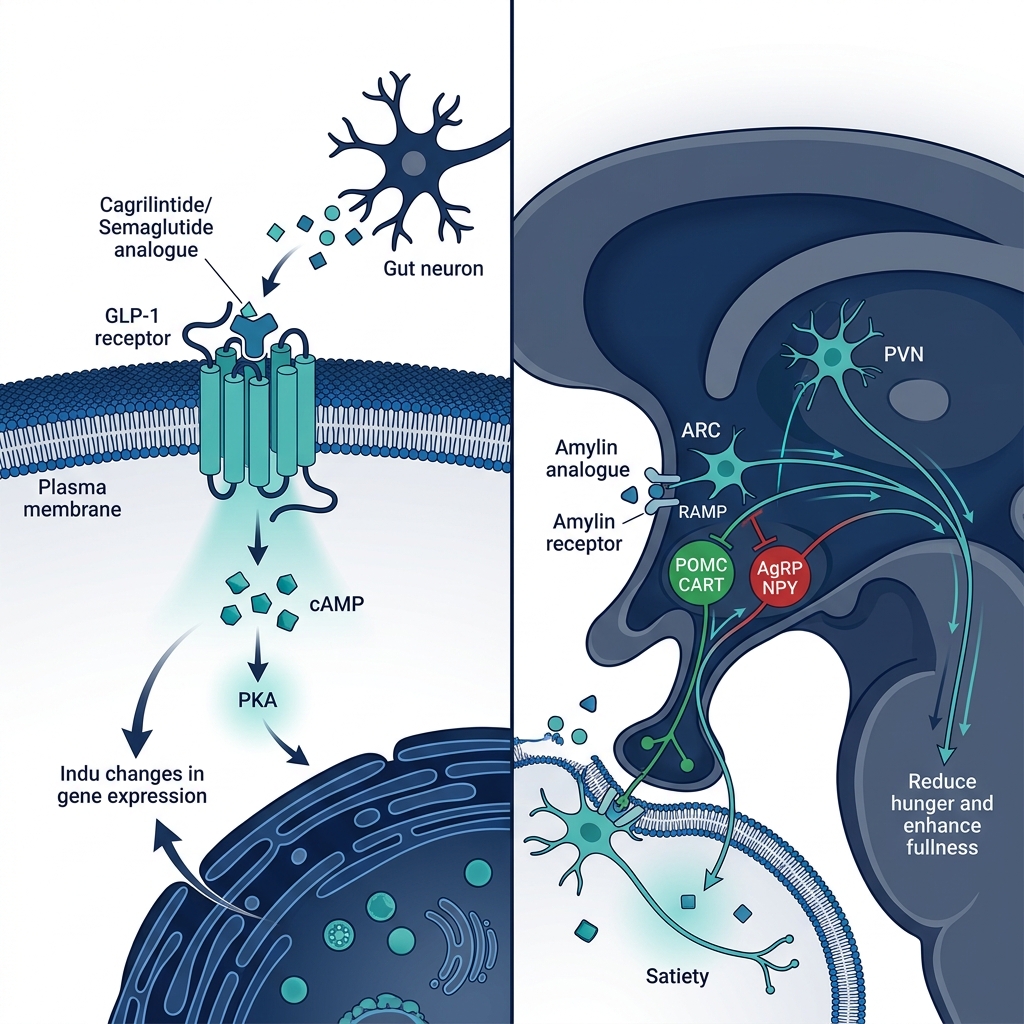
CagriSema combines cagrilintide, an amylin analog, with semaglutide, the GLP-1 receptor agonist in Wegovy and Ozempic. Two mechanisms. One injection. The REDEFINE-1 trial showed 22.7% average body weight reduction at 68 weeks in adults with obesity — roughly double what we typically see with semaglutide alone.
That’s not a rounding error. That’s a different category.
Here’s what the data actually shows, what it means for your patients, and where CagriSema fits in the current GLP-1 landscape.
What Is CagriSema?
CagriSema is a fixed-dose combination of:
- Semaglutide — a GLP-1 receptor agonist (same mechanism as Wegovy/Ozempic)
- Cagrilintide — an amylin analog that works on a different receptor pathway
Amylin is a hormone secreted alongside insulin by the pancreatic beta cell. It works primarily in the hypothalamus to reduce appetite, slow gastric emptying, and regulate food-seeking behavior. Unlike GLP-1, which acts mainly on the incretin system, amylin acts directly on brainstem and hypothalamic centers that control hunger.
The combination is logical: GLP-1 suppresses appetite through gut-brain signaling. Amylin suppresses appetite through a distinct hypothalamic pathway. Two locks, one keyhole — the drug hits both.
What Did REDEFINE-1 Show?
REDEFINE-1 was a 68-week randomized controlled trial in adults with obesity (BMI ≥30, or BMI ≥27 with at least one weight-related comorbidity), without type 2 diabetes.
Key results:
- CagriSema (2.4mg semaglutide + 2.4mg cagrilintide): 22.7% average body weight reduction
- Semaglutide alone (2.4mg): 11.9% average body weight reduction
- Cagrilintide alone (2.4mg): 7.0% average body weight reduction
- Placebo: 2.3% average body weight reduction
The combination outperformed both individual components by a significant margin — confirming that the dual mechanism is genuinely additive, not just cumulative.
The dropout rate was lower in the CagriSema group compared to semaglutide alone (14% vs 21%), suggesting better tolerability when both drugs are combined.
What About REDEFINE-2?
REDEFINE-2 studied CagriSema in adults with obesity and type 2 diabetes. Results were consistent with REDEFINE-1: CagriSema produced significantly greater weight reduction than semaglutide alone, with similar tolerability.
For the large population of patients with obesity + T2D — a group that has fewer medication options and more metabolic complexity — this is particularly relevant.
How Does CagriSema Compare to Tirzepatide?
This is the question I’m hearing most often.
Tirzepatide (Zepbound, Mounjaro): Dual GLP-1 + GIP receptor agonist. ~21.6% average weight loss (SURMOUNT-5, head-to-head vs semaglutide).
CagriSema (if approved): GLP-1 (semaglutide) + amylin analog. ~22.7% average weight loss (REDEFINE-1, though not head-to-head vs tirzepatide).
These numbers are from different trials — you cannot directly compare them. Head-to-head data between tirzepatide and CagriSema doesn’t exist yet. What we can say: both represent a meaningful step up from GLP-1 monotherapy, and the GIP vs amylin mechanism difference may matter for individual patients.
My clinical take: for patients who respond well to semaglutide but plateau, CagriSema could offer an additional mechanism without switching drug classes. For patients who haven’t tried a GLP-1 yet, the choice between tirzepatide and CagriSema will depend on individual factors, access, and — once CagriSema is approved — price.
FDA Timeline and What to Expect
Novo Nordisk filed the New Drug Application for CagriSema in December 2025. The FDA typically takes 10-12 months for standard review of obesity medications, putting a potential approval in late 2026 to mid-2027.
If approved, CagriSema would likely launch at a price point similar to or higher than current GLP-1 formulations. Supply and access will depend on Novo Nordisk’s manufacturing capacity.
We’ll update this page as the approval process unfolds.
FAQ — CagriSema
Is CagriSema available now? Not yet. Novo Nordisk filed for FDA approval in December 2025. Approval is expected in late 2026 to mid-2027. We will update this page when CagriSema becomes available at Clinical Nutrition Center.
How does CagriSema work differently from Wegovy or Zepbound? Wegovy uses semaglutide alone (GLP-1 only). Zepbound uses tirzepatide (GLP-1 + GIP). CagriSema combines semaglutide (GLP-1) with cagrilintide (amylin analog), targeting a different appetite pathway. The combination has shown greater average weight loss than semaglutide alone in clinical trials.
How much weight can I lose with CagriSema? In the REDEFINE-1 trial, adults with obesity lost an average of 22.7% of their body weight at 68 weeks on CagriSema. Individual results vary based on starting weight, adherence, diet, exercise, and other health factors.
Will CagriSema be covered by insurance? Coverage decisions won’t be made until after FDA approval. We expect Medicare Part D plans and some commercial insurers to cover CagriSema, similar to how they cover Wegovy and Zepbound. Our team will help you navigate coverage options once CagriSema is approved.
Can I take CagriSema if I’m already on a GLP-1 medication? No — CagriSema is its own fixed-dose combination product. You would transition from your current GLP-1 therapy to CagriSema under physician supervision if and when it is approved and available.
Is CagriSema available at Clinical Nutrition Center? Not yet. We are following the FDA approval process closely and will offer CagriSema as soon as it is approved and available through our pharmacy and supply channels. Contact us to be added to our interest list.
Ready to plan for the next generation of obesity medications? Our board-certified obesity team is tracking CagriSema and all emerging therapies. Whether you’re currently on a GLP-1 or considering treatment for the first time, we’ll help you understand your options.
Schedule through our patient portal or call us at (303) 750-9454.