


FDA Cracks Down on Compounded GLP-1s: What Denver Patients Need to Know

Research Brief | Dr. Ethan Lazarus, MD | Clinical Nutrition Center | July 24, 2026
If you got your GLP-1 prescription through a telehealth app and pay $50 a month, you may want to read this carefully.
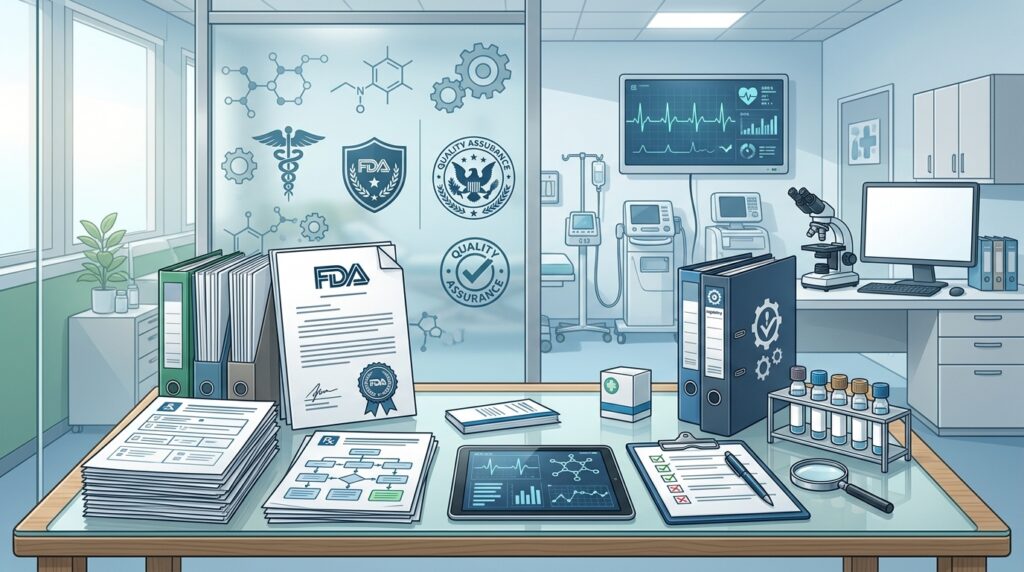
The FDA just sent 25–30 warning letters to telehealth companies — the second major crackdown since March 2026 — for illegally marketing compounded versions of Ozempic, Wegovy, and Zepbound. This matters for Denver patients, because a large chunk of the people on these drugs right now are on the compounded version.
Here’s what’s actually happening.
Why Compounders Got a Pass (Temporarily)
During the Ozempic and Wegovy shortages of 2022–2024, federal law allowed compounding pharmacies to make copies of those drugs. At the peak, nearly one in three Americans on a GLP-1 was getting it from a compounder. The shortages have ended. The legal basis for those copies no longer exists. But telehealth companies kept selling them — hence the warning letters.
The Safety Problem Is Bigger Than Legal Eligibility
It’s not just about whether compounded versions are technically allowed. Stanford Medicine physicians are raising alarms about *what’s actually in these formulations*:
- **Unapproved salt forms.** Compounders are using semaglutide sodium and semaglutide acetate — salt forms never approved by the FDA. We don’t have solid data on how these behave in the body compared to the real thing.
- **B12 and carnitine added in.** One 2026 study found that B12 chemically bonds with tirzepatide, creating a molecule nobody has studied.
- **Sublingual drops and oral dissolving tablets.** These have never appeared in a single clinical trial. A Stanford pharmacist put it bluntly: “Nobody legitimate makes sublingual semaglutide.” Yet that’s exactly what’s being sold.
- **Multi-dose vial dosing errors.** Patients have accidentally injected 10–20 times their prescribed dose. Poison control centers have seen a more than 15-fold increase in GLP-1 related calls since 2019. Ninety-five percent of GLP-1 adverse events in 2024 were related to dosing or administration — not the drug itself.
What This Means for You
If you’re currently on a compounded GLP-1, don’t panic. But do have a conversation with a physician — not a app — about switching to an FDA-approved option. That’s the standard of care.
Here in Denver and across Colorado, we’re seeing patients who chose telehealth for convenience and are now looking for a more supervised, science-based approach. That’s exactly what we do at Clinical Nutrition Center. Every patient on a GLP-1 in our practice is on an FDA-approved medication, at the correct dose, with hands-on follow-up.
Clinical Takeaway
The FDA’s enforcement actions are targeting telehealth companies selling unapproved, unregulated compounded GLP-1 formulations. Patients on these products face real risks — from improper dosing to unknown drug interactions. FDA-approved GLP-1 medications (Wegovy, Zepbound, Ozempic, Mounjaro) remain the standard of care. If you’re using a compounded version, talk to a qualified physician about transitioning to an approved product with appropriate supervision — especially here in Colorado, where demand for these therapies is high and telehealth shortcuts are common.