


Tirzepatide vs. Semaglutide: Which GLP-1 Better Preserves Muscle During Weight Loss?

The Reality of Muscle Loss on Anti-Obesity Medications: What the Data Actually Shows
When you lose 30, 50, or 100 pounds, you are not just losing fat—you are also shedding lean mass. It is a predictable physiological reality of significant weight loss: as the body’s overall mass decreases, it requires less structural support and energy to move, leading to a reduction in muscle tissue.
With the explosive popularity of highly effective Anti-Obesity Medications (AOMs) like semaglutide and tirzepatide, a new concern has emerged: Are these medications causing excessive muscle wasting? And does the specific medication you choose make a difference?
Here is what the latest clinical data tells us about body composition, medication choice, and how to protect your strength.
The Muscle Reality of Weight Loss
First, we must separate drug side effects from normal biology. When you create a substantial caloric deficit, the body adapts. Whether you achieve a 20% weight reduction through bariatric surgery, strict dieting, or an AOM, the composition of that weight loss remains remarkably consistent.
Across major clinical trials, lean mass typically represents 25% to 30% of the total weight lost, meaning 70% to 75% of the loss comes directly from fat. Because the reduction in fat far outpaces the reduction in muscle, the overall ratio of muscle-to-fat actually improves for the vast majority of patients. It is an adaptive remodeling process, not a disease state.
Tirzepatide vs. Semaglutide: Is One Better for Muscle?
Tirzepatide (Zepbound) and semaglutide (Wegovy) utilize slightly different mechanisms. Semaglutide targets the GLP-1 receptor, while tirzepatide targets both GLP-1 and GIP receptors.
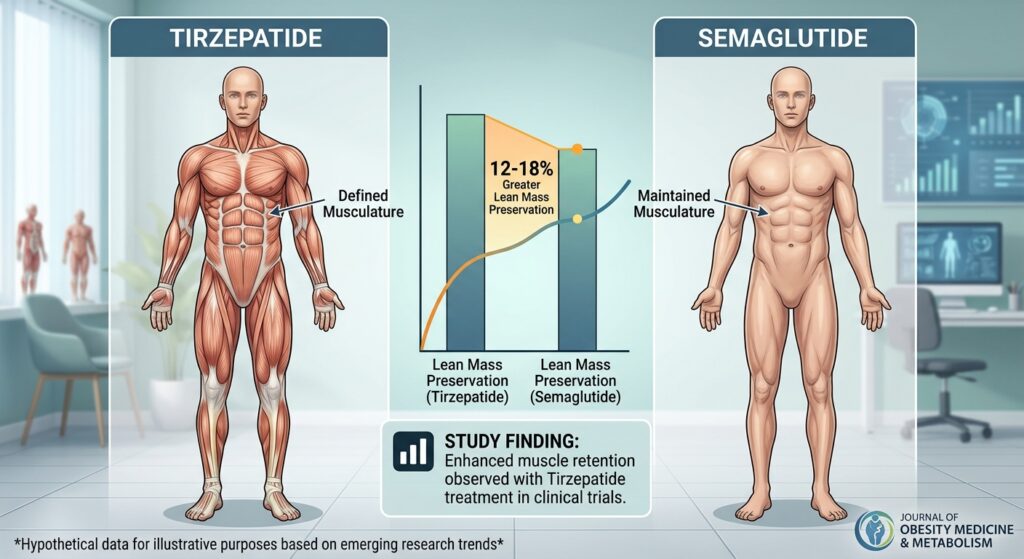
Because tirzepatide activates dual pathways, there has been speculation that it might preferentially protect muscle. However, the landmark SURMOUNT-5 trial (published in mid-2025), which compared the two medications head-to-head, clarified the clinical reality:
- Total Weight Loss: Tirzepatide drives significantly greater total weight loss (averaging over 20%) compared to semaglutide (averaging roughly 14%).
- Proportional Muscle Loss: The percentage of weight lost from lean mass is practically identical between the two drugs.
- The Absolute Numbers: Because patients on tirzepatide lose significantly more total pounds, they actually lose more absolute pounds of muscle than those on semaglutide.
In short, neither medication acts as a magic shield for muscle tissue. The loss of lean mass is tied strictly to the magnitude of total weight loss, not the specific brand of the injectable.
What About the New High-Dose Semaglutide?
In March 2026, the FDA approved a new high-dose formulation of semaglutide (Wegovy HD 7.2 mg). While some early rumors suggested this formulation was designed to improve lean mass retention, this is inaccurate.
The 7.2 mg dose was approved to help patients achieve deeper weight reduction—producing nearly 20% total weight loss in the STEP UP clinical trials—putting its efficacy much closer to that of tirzepatide. As with all AOMs, achieving this higher magnitude of weight loss requires careful attention to maintaining muscle.
The Practical Approach in the Clinic
AOMs are incredibly effective tools for treating the chronic disease of obesity, but they are not standalone cures. Because neither semaglutide nor tirzepatide will inherently protect your muscle, the responsibility shifts to lifestyle interventions.
If functional capacity, strength, and metabolism are primary concerns—and they should be for everyone losing significant weight, especially aging adults—the clinical protocol is straightforward:
- Prioritize Protein: Adequate dietary protein is the building block your body needs to signal muscle preservation during a caloric deficit.
- Resistance Training: Lifting weights or engaging in bodyweight exercises provides the mechanical stimulus required to tell your body that muscle tissue is essential and should not be burned for fuel.
You came to lose weight, but you also want to keep your strength and energy. The data is clear: your choice between tirzepatide and semaglutide should be based on your specific weight loss goals, tolerability, and metabolic needs—not on muscle preservation. Protecting your lean mass requires an active, structured lifestyle approach alongside your medication.
Sources:
- SURMOUNT-5 Clinical Trial (May 2025, New England Journal of Medicine): The first head-to-head trial comparing the efficacy and safety of tirzepatide versus semaglutide for obesity management, detailing differences in total weight reduction.
- STEP UP Clinical Trial / FDA Approval (March 2026): Evaluated the safety and efficacy of the newly approved once-weekly semaglutide 7.2 mg (Wegovy HD) for chronic weight management.