


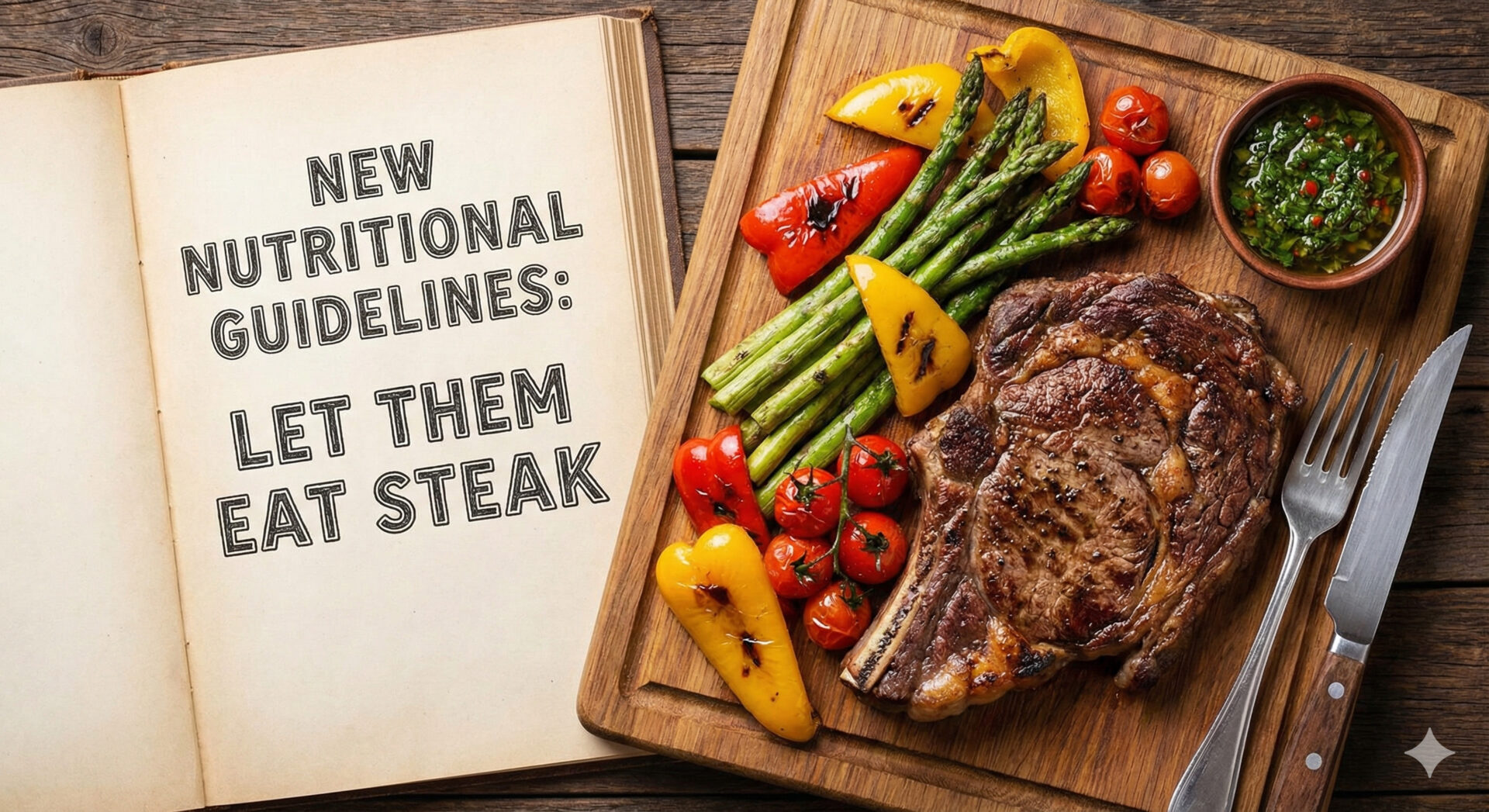
Medical Weight Loss Colorado: A Doctor’s Review of the 2026 RFK Jr. Guidelines
For the last 40 years, the government has told us the same thing: eat less fat, eat moderate amounts of glp-1-protein-strategy-preserve-muscle-while-losing-weight”>protein, and base your diet on grains like bread and pasta. You probably remember the old Food Pyramid or the MyPlate circle. They told us a healthy meal was colorful, full of plants, and low in saturated fat.
That era is over.
Robertmusclennedy Jr. (the Secretary of Health and Human Services) just released the new 2026 Dietary Guidelines, titled “Eat Real Food.”muscle These new rules don’t just tweak the old advice; they completely flip it.
They have introduced a new image: the Inverted Food Pyramid.
At Clinical Nutrition Center, our Weight Loss Dietitians in Greenwood Village, Colorado review these guidelines and have spent years helping patients navigate confusing diet trends. We see the damage caused by extreme swings in advice. We have seen the damage caused by the low-fat/high-sugar craze of the 90s. But we also see the high cholesterol levels that come from extreme meat-heavy diets.
The new government rules declare an end to the “War on Protein” and the “War on Saturated Fat.” They tell us to eat more steak, butter, and eggs, while banning sugar entirely.
As a doctor, I have mixed feelings. Some parts of this new plan are excellent. Other parts—specifically the push for eating lots of animal fat—make me very worried for our nation’s glp-1-medications-and-heart-health-what-the-latest-research-shows”>heart health.
Let’s break down the Good, the Bad, and the Ugly of these new rules, and talk about what you shouldheart healtht to stay healthy.
The New Look: The Inverted Pyramid
To understand how big this change is, you have to look at heart healthure. The government has thrown away “MyPlate.” In its place is an upside-down pyramid.
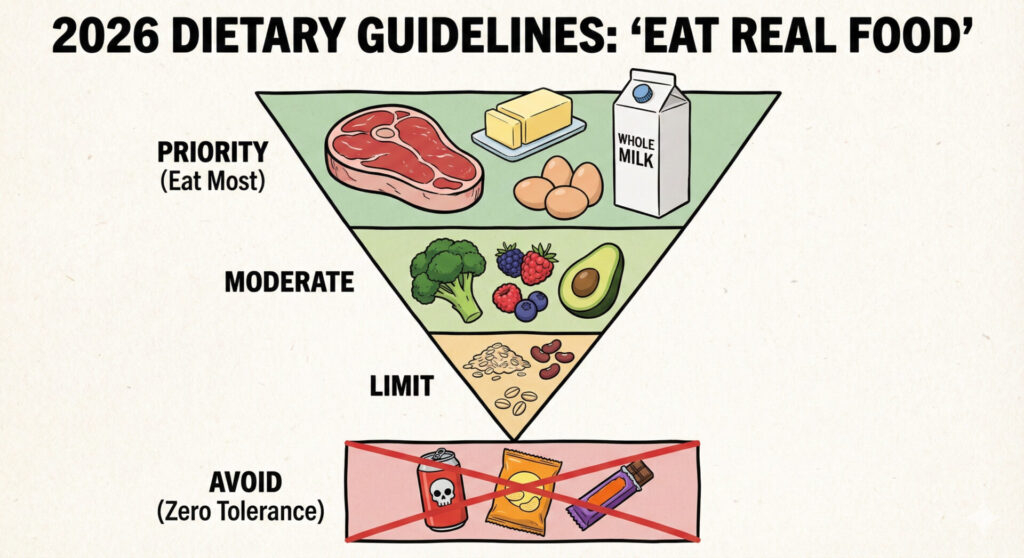
- The Top (Widest Part): This is what you are supposed to eat the most of. It includes red meat (steak, ground beef), eggs, butter, and whole milk.
- The Middle: Vegetables and fruits.
- The Bottom (Tiny Point): Whole grains.
- The Forbidden Zone: Ultra-processed foods (like chips and cookies) and added sugar.
The shocking part isn’t just that they want us to eat protein. It’s that they put steak, cheese, and whole milk at the very top, effectively calling them the healthiest foods you can eat.
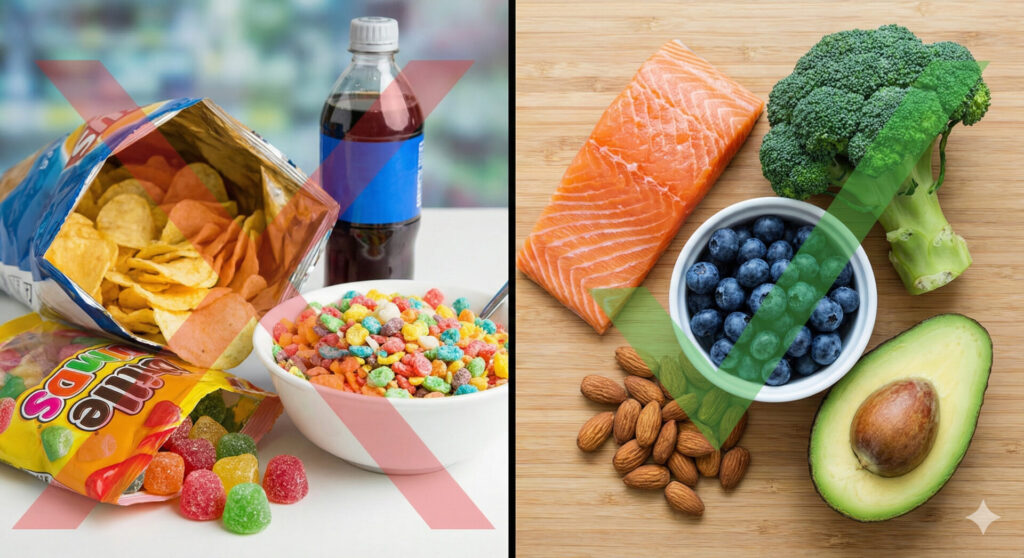
The Good News: Fighting Sugar and Fake Food
Before we get to the controversial stuff, let’s give credit where it is due. There are some parts of these guidelines that I absolutely agree with.
1. The War on “Ultra-Processed” Foods
For the first time, the government is officially warning us against Ultra-Processed Foods (UPFs). These are the packaged foods full of fake dyes, flavors, and preservatives.
Why is this good? Because these foods are designed to trick your brain. They are so soft and sweet that you can eat them without ever feeling full. When you eat a steak or a bowl of broccoli, your stomach sends a signal to your brain saying, “I’m full.” When you eat processed junk, that signal never gets sent.
Cutting these foods out is the single best thing you can do for your health.
2. Zero Tolerance for Sugar
The new rules are very strict about sugar. They recommend zero added sugar for kids and almost zero for adults.
This is smart medicine. Sugar, especially fructose (found in soda and candy), is hard on your liver. It drives a condition called “wegovy-and-zepbound“>wegovy-now-approved-to-treat-fatty-liver-disease-mash“>mash“>fatty liver disease,” which we are seeing in more and more children. By telling us to cut sugar out, the government is finally admitting that sugar is a treat, not a food group.
3. Prioritizing Protein
The new guidelines suggest eating more protein—about 1.2 to 1.6 grams for every kilogram you weigh. For a 200-pound man, that means going from about 72 grams a day to over 100 grams.
This is a win. Protein helps you feel full longer than carbs or fats do. Plus, if you are utilizing medical weight loss treatments—specifically glp-1 medications like Wegovy, denver-medical-weight-loss-guide-to-the-new-wegovy-pill”>denver“>Ozempic,
The Bad News: The Risk to Your Heart
While I love the stance on sugar, I am deeply concerned about the advice on fat.
The new guidelines declare that saturated fats—like butter, beef tallow (beef fat), and lard—are “healthy fats.” They put them in the same category as olive oil.
Why This is Dangerous
Heart doctors have known for decades that saturated fat raises your LDL cholesterol (the “bad” cholesterol).
Think of your liver like a drain for cholesterol. Saturated fat clogs the drain. When the drain is clogged, cholesterol builds up in your blood. Eventually, that cholesterol sticks to the walls of your arteries and forms plaque. This is what causes heart attacks and strokes.
We see this in our clinic all the time. We call them “Lean Mass Hyper-Responders.” These are healthy, fit people who switch to a carnivore or keto diet (eating mostly meat and fat), and suddenly their cholesterol skyrockets to dangerous levels.
By telling the whole country to “eat steak and butter,” the government is setting millions of people up for heart problems down the road.
The Colon Cancer Risk
There is another risk to putting red meat at the top of the pyramid: Colon Cancer.
Science has shown that eating a lot of red meat is linked to higher rates of colon cancer. At the same time, the new pyramid pushes grains and beans (which are full of fiber) to the bottom. Fiber is what protects your colon. A diet of steak and eggs has zero fiber. That is a recipe for gut health problems.
The Ugly: Who Wrote These Rules?
Usually, these guidelines are written by a group of independent scientists and doctors. This year, things were different.
The assigned committee of scientists actually recommended limiting red meat. But the administration rejected their report. Instead, they brought in a new group of advisors—a “Shadow Panel”—to write the final rules.
Many of these new advisors have close ties to the meat and dairy industries.
- Nina Teicholz: A journalist who has worked with beef industry groups to promote eating meat.
- Gary Taubes: An author who believes carbs are the only thing that makes us fat, and that calories don’t matter (which has been proven wrong in studies).
- The Beef Lobby: Groups like the National Cattlemen’s Beef Association celebrated these new rules as a huge victory.
This wasn’t just about science; it was about industry influence.
“Let Them Eat Steak”: The Cost Problem
There is also a simple math problem here. Steak is expensive.
The new guidelines imagine a country where everyone eats grass-fed beef and organic eggs. That sounds lovely, but it is an elitist fantasy.
- Cost: Meat is the most expensive way to get calories. Beans, lentils, and grains (which are now at the bottom of the pyramid) are the most affordable.
- School Lunches: These rules dictate what schools feed our kids. Schools have tight budgets. If they are forced to buy expensive meat, theDenvert have to cut back on fresh fruits and veggies to pay for it.
For millions of families on a budget, a “steak-first” diet is simply impossible.
Medical Weight Loss in Denver: How This Affects You
For our patients across the Denver metro area—from Highlands Ranch and Littleton to Lone Tree and Aurora—these guidelines can be confusing. A ‘one-size-fits-all’ steak diet rarely works for long-term health. Successful medical weight loss in Colorado requires a personalized approach that considers your unique biology, not just a government pyramid.
The Doctor’s Advice: The Middle Way
So, you are hearing one thing from the government (“Eat Steak!”), another from heart doctors (“Don’t!”), and a third from your wallet (“I can’t afford it!”). What should you do?
At the Clinical Nutrition Center, we believe in a balanced approach. You don’t have to choose a side in the “food wars.” Here is how to navigate the new rules safely:
1. Adopt the “Zero Sugar” Mindset: Take the advice on sugar seriously. Cutting out sugary drinks and ultra-processed snacks is the best thing you can do. If a package has “Added Sugar,” put it back.
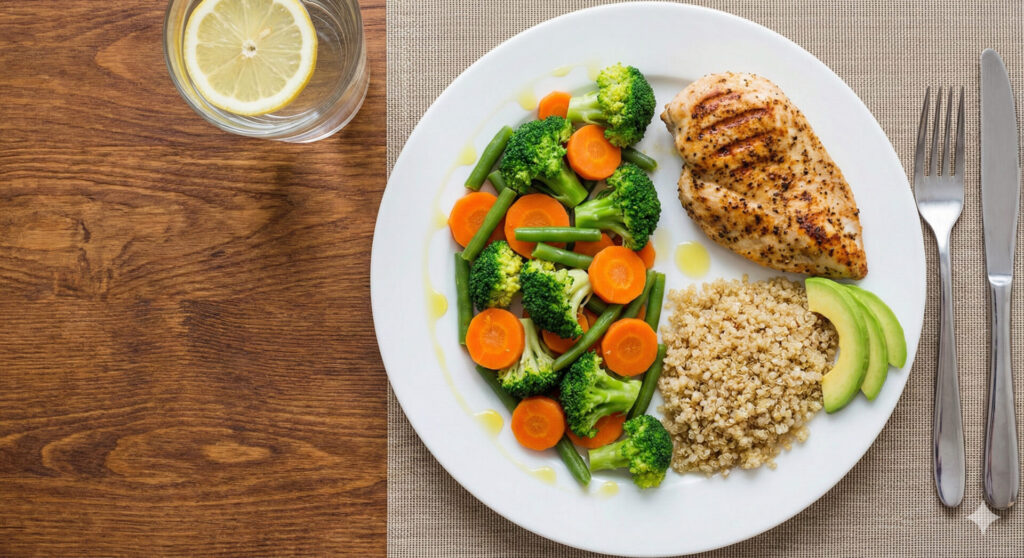
2. Hit Your Protein Goal (But Mix It Up): Eat more protein to stay full and keep your metabolism high. But you don’t need to eat a ribeye every night. Mix in chicken, fish, Greek yogurt, and plant proteins like tofu or lentils. These give you the protein without the artery-clogging fat.
3. Don’t Drink the Butter: Ignore the advice to cook with beef tallow and butter. There is no need to add extra saturated fat to your diet. Stick to Extra Virgin Olive Oil or Avocado Oil for cooking. These fats actually protect your heart.
4. Check Your Blood Work: If you decide to try this new “high meat” diet, you must get your cholesterol checked after 3 months. EMounjaropatient accountability is part of our standard of care; we provide monthly medical check-ins to monitor these exact metrics.
5. Utilize Your Care Team: Don’t do this alone. Use our direct messaging patient portal to ask your Weight Loss Dietitian if a high-fat diet is safe for your specific medication plan (especially if you are taking Wegovy / Ozempic or Mounjaro).
6. Don’t Forget Fiber: Don’t let the new pyramid scare you away from plants. Vegetables should still take up half your plate. Your gut needs fiber to stay healthy.
Conclusion
The new “Eat Real Food” guidelines are a mix of brave new ideas and dangerous risks.
It is great that the government is finally fighting against sugar and fake foods. But in their excitement to change things, they have swung too far the other direction. They have replaced the old “Low Fat” dogma with a new “Pro-Meat” dogma.
“Let them eat Steak” is a catchy slogan. But until steak is as cheap as pasta, and until heart disease is no longer the #1 killer in America, we need to be careful.
Follow the science, not the hype. Eat real food, but keep it balanced.
Disclaimer: This article is for informational purposes only and does not constitute medical advice. For personalized weight loss guidance, please schedule a consultation withGLP-1t the Clinical Nutrition Center.