


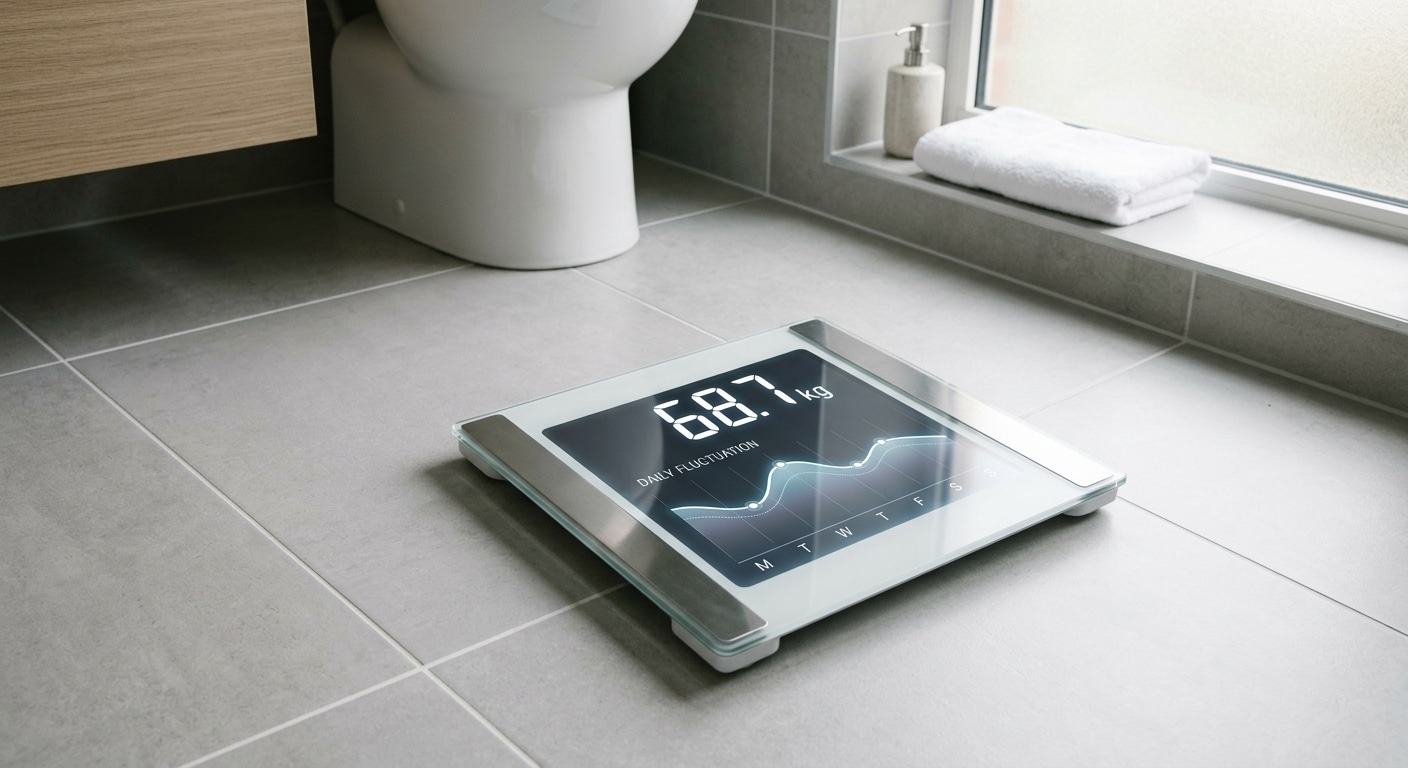
Why Does Your Weight Fluctuate Every Day?
If you often get on the scale every day, you probably notice that your weight changes significantly each time. Sometimes, you know why there is change -- you could have had a big meal right before turning in the previous night, or you could have had an especially strenuous hour of exercise.
This page contains affiliate links. As an Amazon Associate, Clinical Nutrition Center earns from qualifying purchases. This does not influence our editorial content or product recommendations.
If you step on the scale every morning and the number is three pounds higher than yesterday — despite eating well and exercising — you’re not broken. You’re human. And what you’re experiencing isn’t fat gain. It’s the noisy, complicated physics of a living, changing body.
Your weight can swing 5–10 pounds in a single day due to water retention, food mass, glycogen shifts, sodium, hormones, and fiber. Here’s what science says is actually happening when the numbers move — and why the scale was never the whole story.
Weight changes caused by sodium intake
Foods that are rich in salt can cause your body to retain water. Some people’s bodies tend to respond to sodium more dramatically than others, retaining a great deal of water with only a moderate increase in salt consumption.
It’s important to realize that salt from every source counts. If you don’t recall having included much salt in your meals, you need to remember that a number of foods from frozen meals to condiments, and from cold cuts to canned foods, contain a great deal of salt. If you decide to substitute a regular meal with canned soup one day, for instance, you may notice a big increase on the weighing scale the following morning. It is likely to only be water retention from the salt in the canned soup, however.
Weight changes caused by carbohydrates
The consumption of carbohydrates leads to water retention. When you have a starchy meal of pasta, rice or bread, you may notice that you put on some weight. Every ounce of carbohydrate that you eat can actually lead to three times as much water retention. It’s important to understand that the increase in weight does not come from a buildup of fat deposits.
Weight changes caused by bodily functions
A meal that you eat can weigh as much as a pound. The water that you drink in a day can weigh several pounds, as well. Eating and drinking can cause you to gain weight, and sweating and visits to the toilet can cause you to lose weight.
Weight changes caused by exercise
When you lift weights at the gym, your muscles retain water to help with the repair process. It’s water that can end up showing as a fluctuation in your weight on the weighing scale.
Weight changes caused by medications
You can gain weight from some medications for high blood pressure, diabetes, and psychiatric disorders. From causing the body to retain water weight to increasing the body’s levels of fat, you can notice weight gains worth several pounds with some medications.
Weight changes caused by periods
Menstrual periods can cause bloating and fluid retention. These changes usually occur immediately before a period sets in, and during a period. Studies have found that changes in the body’s levels of progesterone cause food cravings and emotional eating that lead to weight gains, as well.
Weight changes caused by drinking alcohol
Alcohol, being a diuretic, causes the kidneys to excrete a great deal of liquid. Often, people need to pee within 15 minutes of a large drink. People who drink alcohol often may eat salty snacks to go with their alcohol, as well. The salt can lead to fluid retention. You may notice weight fluctuations depending on whether it is the fluid retention or excretion that has the upper hand.
Most of the daily fluctuations that occur in your weight come from the way your body deals with water. Buying a sophisticated bathroom scale that measures your body’s water content and fat content may help you isolate these fluctuations, and get to the real number that represents your weight.
Day-to-day fluctuations matter little. Any number of factors can cause you to pick up a little extra weight or lose it. You should be concerned about putting on weight only if the weight that you gain stays on for longer than a week. Then, you may need to pay closer attention to your diet or your workout plan.
Want a more complete picture of what’s happening in your body?
A body composition scale like the Withings Body Comp ($199) uses bioelectrical impedance to measure muscle mass, visceral fat, and total body water — data that tells you far more than scale weight alone. Many patients find it helps distinguish actual fat loss from normal water fluctuation.