


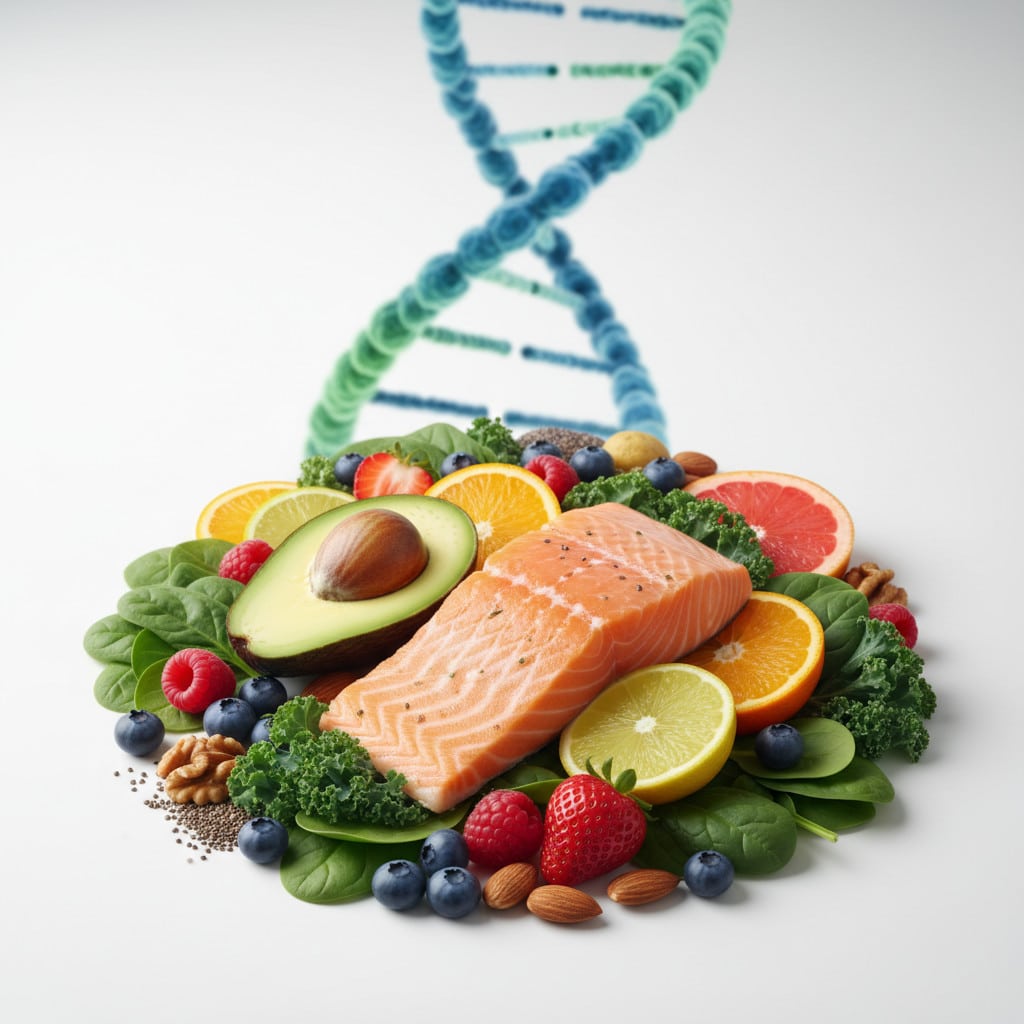
Beyond the Plate How Nutrition Rewires Your Metabolic Health
This March, for National Nutrition Month, we are moving the conversation beyond calories and portion sizes to explore the profound biological impact of food on our metabolic health. The long-held idea that weight management is a simple equation of ‘calories in, calories out’ fails to account for the complex hormonal and cellular signals that food triggers inside our bodies. Understanding this science is the foundation of modern obesity medicine.
The Biochemistry of a Meal: Not All Calories Are Equal
When you consume food, your body doesn’t just see a number of calories; it sees a complex package of information. The macronutrients—glp-1-protein-strategy-preserve-muscle-while-losing-weight”>protein, fat, and carbohydrates—initiate distinct hormonal cascades that regulate musclehing from hunger to fat storage. For example, a high-protein meal tends to be more satiating than a meal high in refined carbohydrates because it stimulates the release of satiety hormones like peptide YY (PYY) and glucagon-like peptide-1 (GLP-1), while also requiring more energy to digest—a process known as the thermic effect of food.
Conversely, ultra-processed foods, often high in refined sugars and unhealthy fats, can overwhelm our metabolic systems. A recent large-scale analysis discussed in journals like JAMA continues to reinforce the link between high consumption of these foods and an increased risk of obesity and type 2 diabetes. These foods can drive rapid spikes in blood sugar and insulin, promoting fat storage and leading to insulin resistance over time, a key precursor to metabolic disease.
Your Gut Microbiome: The Inner Ecosystem Dictating Health
Your digestive tract is home to trillions of microorganisms, collectively known as the gut microbiome. This inner ecosystem plays a critical role in your metabolic health, and its composition is directly shaped by your diet. A diet rich in diverse, fiber-rich plant foods—like vegetables, legumes, and whole grains—feeds beneficial gut bacteria.
These bacteria ferment fiber and produce compounds called short-chain fatty acids (SCFAs). SCFAs are metabolic powerhouses; they help strengthen the gut lining, reduce inflammation, improve insulin sensitivity, and even communicate with the brain to help regulate appetite. A diet lacking in fiber effectively starves this beneficial ecosystem, potentially leading to a state of low-grade inflammation that is closely linked with obesity and metabolic syndrome.
Fueling for Performance and Health
Think of your body as a high-performance engine. To function optimally, especially with the unique physiological demands of an active lifestyle, it needs premium fuel. Just as you wouldn’t want a sudden energy crash while hiking a trail here in Colorado, your cells require stable, consistent energy. A diet centered on whole foods provides this slow-release energy, supporting stable blood sugar and sustained satiety.
This approach isn’t about restriction; it’s about precision. By focusing on nutrient-dense foods, we provide the body with the right information to regulate appetite, manage inflammation, and maintain a healthy metabolism. Nutrition is one of the most powerful tools we have to influence our biology from the inside out.
For personalized medical guidance on this topic, contact the Clinical Nutrition Center at (303) 750-9454 or visit clinicalnutritioncenter.com.