

Survodutide Phase 3: 16.6% Weight Loss in Adults with Obesity
New Phase 3 Data: Survodutide Delivers 16.6% Weight Loss — Dual GLP-1/Glucagon Agonist Shows Metabolic Benefits Beyond the Scale
The SYNCHRONIZE-1 Phase 3 trial results are in — and they’re worth your attention.
Survodutide (BI 456906), Boehringer Ingelheim’s novel dual glucagon/GLP-1 receptor agonist, achieved 16.6% average weight loss at 76 weeks in adults with obesity, compared to just 3.2% with placebo (p<0.0001). That's not a rounding error — that's a 13-point gap on a 76-week trial.
More striking: 85.1% of survodutide participants hit the ≥5% weight loss threshold, versus 38.8% on placebo. In the world of Phase 3 obesity trials, that kind of response rate gets your attention.
What Makes This Different
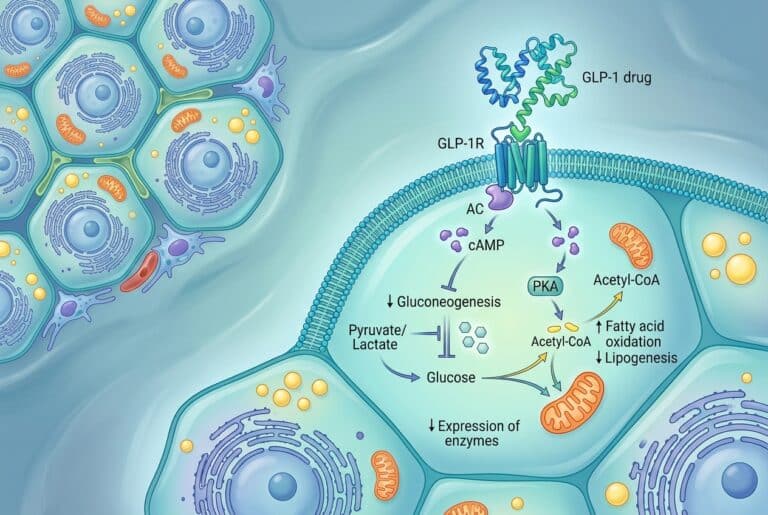
GLP-1 drugs dominate the headlines — and rightfully so. But survodutide brings a second mechanism to the table: glucagon receptor agonism.
Glucagon doesn’t get much press in weight loss circles, but it plays a meaningful role in metabolism. It promotes fat oxidation and supports energy expenditure. In other words, you’re not just eating less — you’re potentially burning more.
Early body composition data suggests survodutide’s weight loss is predominantly fat tissue, with lean mass making up only a small proportion of total loss. For patients worried about losing muscle — a real and valid concern — that’s a meaningful signal.
The trial also showed statistically significant reductions in waist circumference, a key marker of visceral fat. Visceral fat isn’t just storage — it’s metabolically active and tied to cardiovascular risk.
The Liver Connection
Here’s where glucagon gets particularly interesting: it acts on the liver.
Up to 1 in 3 people with obesity develop MASH (metabolic dysfunction-associated steatohepatitis, formerly NASH). Dual GLP-1/glucagon agonism has direct implications for liver fat — a mechanism that single GLP-1 agents don’t replicate.
For Colorado patients — where metabolic disease is prevalent in our communities — that’s a clinically relevant consideration. We’re not just talking about weight on a scale. We’re talking about systemic metabolic health.
What This Means for You
The GLP-1 field is evolving rapidly. We’re no longer in a one-drug-fits-all paradigm — we’re moving toward mechanism-specific, personalized obesity medicine.
Survodutide won’t be for everyone. But for some patients — particularly those who haven’t achieved desired results with existing GLP-1 therapies, or those with fatty liver concerns — this dual agonist may offer a meaningful next step.
Bottom line: Survodutide posted strong Phase 3 numbers — 16.6% weight loss, favorable body composition, waist circumference reduction, and a dual mechanism with liver health implications. Full data drops at the ADA 2026 Scientific Sessions in June. Worth watching.
If you’re on existing therapy and not where you want to be, it’s worth having the conversation with your doctor.
- Dr. Ethan Lazarus is a physician specializing in obesity medicine at Clinical Nutrition Center in Greenwood Village, CO. He sees patients across Denver and the surrounding Front Range communities.*