

5 GLP-1 Mistakes Patients Make (And How to Avoid Them)
If you’re on a GLP-1 medication—or thinking about starting one—you owe it to yourself to get this right. These drugs work. But I see the same mistakes over and over in my Colorado obesity practice, and they cost people results, money, and sometimes their health.
Here are the five most common.
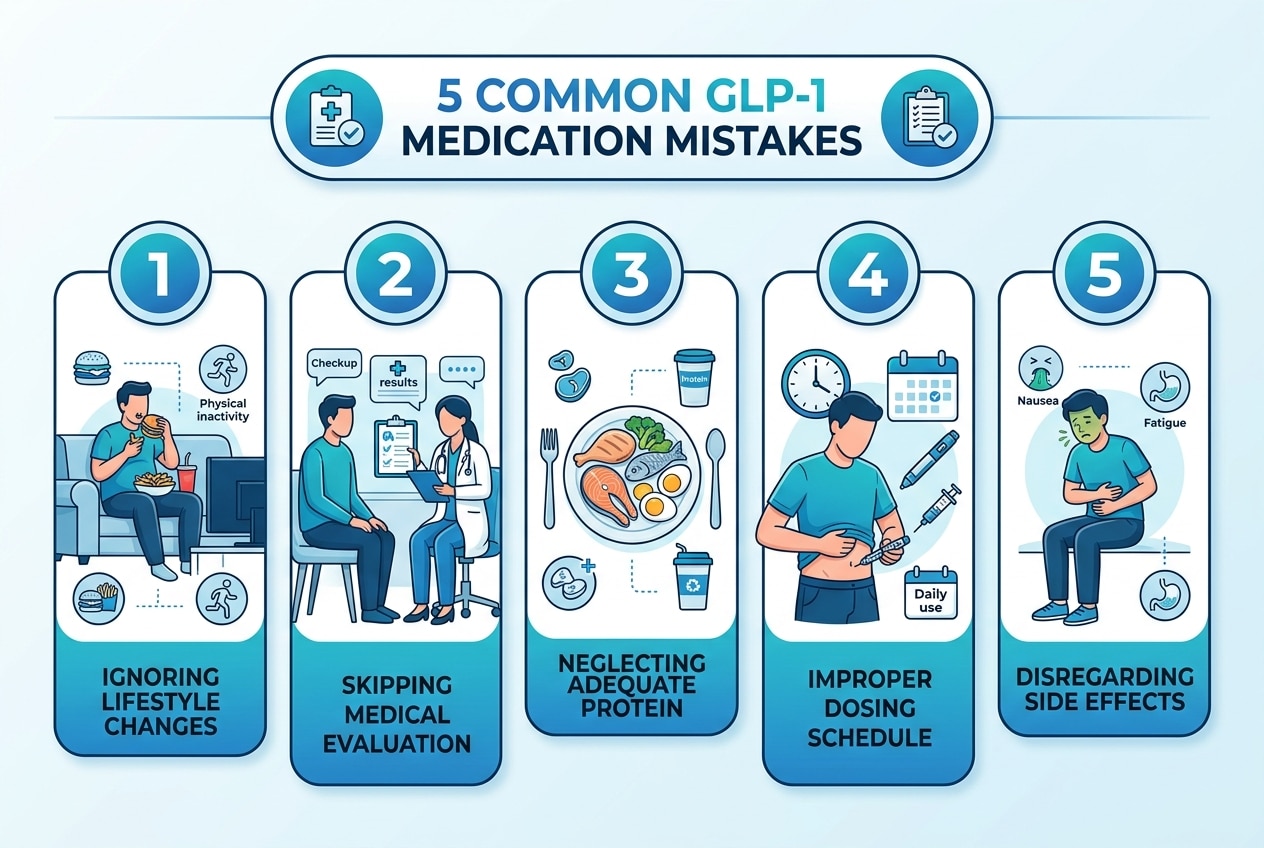
Mistake #1: Using medication as a shortcut around lifestyle change
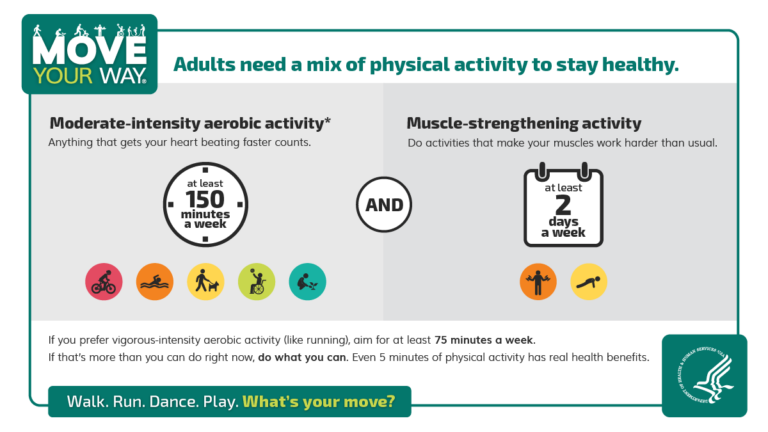
GLP-1s aren’t a substitute for eating well and moving more. They work best alongside a protein-rich diet and consistent exercise. If you’re expecting the drug to do all the heavy lifting while your habits stay the same, you’ll be disappointed.
Mistake #2: Starting without a proper medical evaluation
These aren’t medications you start on a whim. A full assessment—Labs, medical history, current medications—matters. Some patients have silent contraindications that make certain GLP-1s risky. In Denver, where we see a wide range of body types and metabolic conditions, one-size-fits-all prescribing is a mistake.
Mistake #3: Not eating enough protein
This one surprises people. When you’re losing weight on a GLP-1, you need more protein, not less—somewhere in the range of 0.5 to 0.8 grams per pound of body weight per day. For a 200-pound person, that’s 100 to 160 grams daily. Without it, you lose muscle along with fat. That’s not the outcome you’re paying for.
Mistake #4: Ramping doses too fast
The titration schedules exist for a reason. Jumping to higher doses before your body adapts leads to nausea, vomiting, and a lot of people stopping altogether. Monthly check-ins with your provider to monitor how you’re responding isn’t a suggestion—it’s how you stay on track.
Mistake #5: Ignoring side effects instead of managing them
Nausea, constipation, fatigue—these aren’t things you have to just live with. Smaller meals (think the size of your fist), lower fat intake, ginger for nausea, soups and broth for days when eating feels hard, fiber for constipation. These small adjustments keep you compliant so the medication can do its job.
The bottom line
GLP-1 medications are powerful tools. But they’re tools that require a doctor who knows what they’re doing, a patient who understands the commitment, and a plan that goes beyond the prescription itself.
If you’re in the Denver area and want to make sure you’re doing this right, I’d rather be the one helping you from the start.