

Zepbound vs. Wegovy: Understanding the SURMOUNT-5 Trial and How to Protect Your Muscle
The medical weight loss landscape recently gained a crucial piece of data with the publication of the SURMOUNT-5 trial. For the first time, we have a large, head-to-head study directly comparing the two most effective anti-obesity medications available today: tirzepatide (the active ingredient in Zepbound and Mounjaro) and semaglutide 2.4 mg (Wegovy).
While the headline numbers focus on total weight lost, the more important conversation for long-term health is about what kind of weight is being lost. Here at Clinical Nutrition Center, our goal is not just to help you see a lower number on the scale, but to improve your body composition, metabolic health, and physical function.
Here is a breakdown of what the SURMOUNT-5 data means for you—and why how you lose weight matters just as much as how much you lose.
The Total Weight Loss Picture
The SURMOUNT-5 trial confirmed what we have generally seen in clinical practice: tirzepatide tends to drive a higher magnitude of total weight loss compared to semaglutide.
In the trial, patients taking tirzepatide lost an average of 20.2% of their total body weight over 72 weeks, compared to 13.7% for those on Wegovy. Both of these are remarkable, life-changing outcomes that can significantly reduce the risk of cardiovascular disease, reverse prediabetes, and improve joint health.
However, with greater weight loss comes a greater responsibility to protect your body’s most metabolically active tissue: your muscle.
The Muscle Myth: Percentages vs. Absolute Loss
A common fear surrounding GLP-1 and dual-agonist medications is that they cause unnatural “muscle wasting.” The body composition data from these clinical trials tells a different, much more logical story.
When we look at the data, the percentage of lean mass lost versus fat mass lost is remarkably similar on both medications. For both tirzepatide and semaglutide, roughly 70% to 75% of the weight lost is fat, while 25% to 30% is lean mass.
This ratio is not a side effect of the drugs themselves; it is a standard physiological response to significant weight loss. Because tirzepatide causes a higher total amount of weight loss, patients on tirzepatide will inherently lose a higher absolute number of pounds of lean mass. But proportionally, the medications act the same way. The drugs are not targeting your muscles—your body is simply downsizing its structural support as it becomes lighter.
Importantly, because the fat loss is so substantial, the net result on both medications is a healthier body composition and an improved lean-to-fat ratio.
Why We Must Protect Lean Mass
While some lean mass loss (like decreases in connective tissue, extra fluid, and the muscle previously needed to carry heavier weight) is normal and expected, losing functional skeletal muscle is something we actively work to prevent. Muscle is the engine of your metabolism. Preserving it ensures you stay physically strong, maintain a healthy metabolic rate, and have an easier time maintaining your weight loss in the future.
At Clinical Nutrition Center, we use three core pillars to ensure the weight you lose is the weight you want to lose:
1. Avoid Overly Aggressive Weight Loss Goals
Faster is not always better. When you slash calories too drastically or try to force the scale down too quickly, your body panics. Unable to liberate fat fast enough to meet its high energy demands, it begins breaking down muscle tissue for fuel. By setting realistic, moderate weight loss goals, we give your body the time it needs to comfortably burn fat while sparing your muscle.
2. Prioritize High-Quality Protein
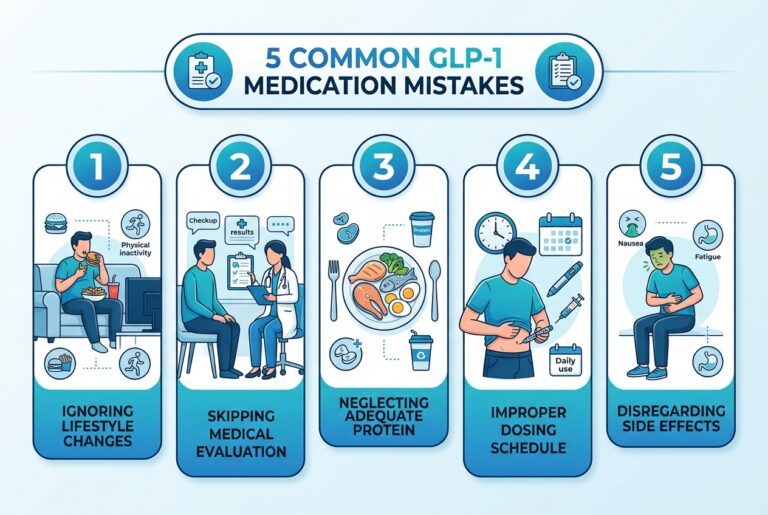
When you are in a caloric deficit, your body needs a steady supply of dietary amino acids to maintain its existing muscle tissue. A nutritionally adequate diet with optimized, high-quality protein intake is non-negotiable on these medications. Protein not only protects your lean mass but also enhances satiety, working synergistically with your medication to keep you full.
3. Engage in Resistance Training
Nutrition provides the building blocks, but physical activity provides the blueprint. If you are losing weight without challenging your muscles, your body assumes it no longer needs them. Incorporating progressive resistance training—whether that means lifting weights, using resistance bands, or doing bodyweight exercises—sends a crucial biological signal to your body to hold onto its functional muscle tissue, even as the fat melts away.
The Bottom Line
The SURMOUNT-5 trial proves we have incredibly powerful tools to treat obesity. Whether your treatment plan includes Wegovy, Zepbound, or another approach, the medication is only one piece of the puzzle.
By pairing these medications with a tailored, nutritionally adequate diet, appropriate physical activity, and sensible weight loss targets, we can ensure that you aren’t just becoming smaller, but fundamentally healthier, stronger, and more resilient.