


Why do we eat what we eat?
Have you ever thought about why you eat what you eat? Is it simple? Do we choose what we put in our mouths?
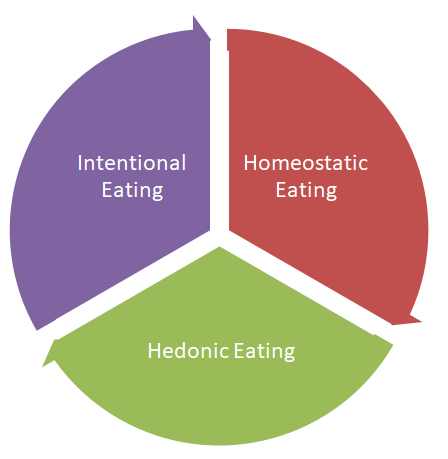
If only life was so easy! It’s now thought that there are actually three separate pathways influencing our eating behavior:
- Homeostatic eating: Homeostatic eating is when your body tells you what it needs to sustain itself — it signals hormonally to let you know how many calories you need. Think of this like the body’s weight thermometer or set-point.
- Hedonic eating: Why do we eat chocolate? Because it’s good and helps us relax! Hedonic eating is influenced by emotions, stress, fatigue, cravings, and desires. This system is influenced by the dopamine signaling portion of the brain — very involved in addictive behaviors and emotions. Perhaps choosing comfort foods helps us lower stress levels in our brains and feel rewarded.
- Intentional eating: This is the willpower part of the brain — we are choosing to eat certain foods, order certain items off a menu, etc.
A story I hear often is: “I’m good all day, but then I’m starving and have cravings all night. I feel like a failure.” What’s really happening is an interplay between these three systems:
- Homeostatic: The person has lost weight. The body recognizes this and produces more hunger hormones, less satisfaction hormones, and lowers the metabolism. The person is hungry at night because the body is trying to restore the lost weight.
- Hedonic: The person had a long, tiring day, is exhausted from trying to eat less and exercise more. The person feels deprived and wants a reward.
- Intentional: Trying not to eat while hungry can only go on so long. At the end of the day, willpower is used up and the previous two systems take over.
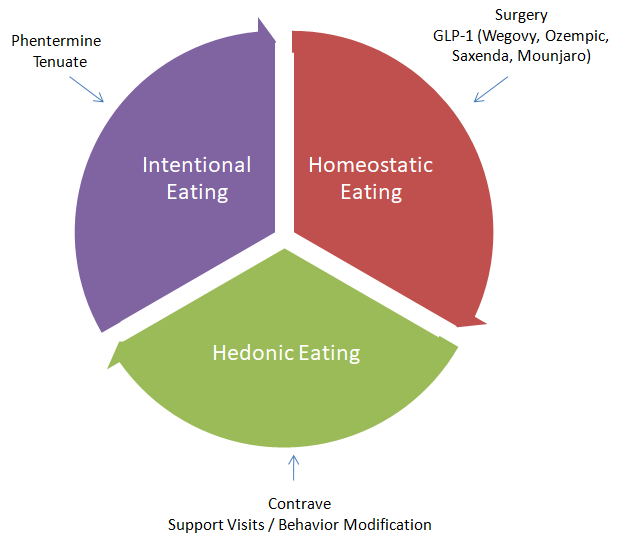
It is interesting to think about where our different medications and procedures might help a patient lose weight:
- Homeostatic eating: Things that lower our body weight set-point include bariatric surgery and injectable GLP-1 medications like Wegovy and Zepbound — they change the hormones that regulate the body weight set-point.
- Hedonic eating: GLP-1 medications work partly on hedonic pathways too, quieting the “food noise” and reducing the reward value of food. Getting good sleep, regular physical activity, stress reduction, and support visits with a registered dietitian or medical provider also help.
- Intentional eating: Phentermine and Tenuate help people with intentional changes to their eating routine — people have more resistance to food and have a buffer; they take a minute to consider their choices instead of immediately eating. People on these medications often tell me they are able to stick with their healthy eating habits more effectively.
The Food Environment Has Gotten Worse
Since I first wrote this, the food environment has only become more engineered — ultra-processed foods designed to be hyper-palatable, food delivery apps that make eating available 24/7, and social media food content that normalizes constant grazing. Understanding why you eat is more relevant than ever.
If you’re working on weight loss and finding you can’t stop eating even when you’re not hungry — that’s biology, not a character flaw. GLP-1 medications work partly by quieting the food noise that makes this so hard. The staff at Clinical Nutrition Center is here to support you while working on all three pathways to help you achieve your goals.
So what can we learn from all this? Losing weight and keeping it off can be challenging because our brains resist changes to our weight and try to protect the heavier body weight. Instead of putting all of our eggs in one basket (such as Intentional → eat less, exercise more), think about working on all three hunger centers. In doing so, you will have more energy, less hunger, and feel more fulfilled.



Hi could the eating just be a habit? Thanks Camilla
Sure thing! Habits, environment, genetics, biology, stress, sleep, cravings, other medications… Everything can certainly contribute to the way we eat.